
Cattle are remarkable animals — their size generates a variety of cuts that no other livestock can match. We offer beef in three programs: 100% grass-fed from our own farm, grain-finished from a trusted partner, and limited Wagyu from Kalkaska. Each has a distinct flavor profile and best use. This guide covers the full range of cuts across all three.
Which program is right for you?
All three programs are raised without growth hormones or antibiotics. The difference is feeding method, fat content, and flavor profile. Not sure? Our farm store staff can help.
100% GRASS FED
From our farm • Seasonal
Hereford and Murray Grey cattle raised and finished entirely on our regeneratively managed pastures. Leaner, with a clean, beef-forward flavor. Processed seasonally — stock up when available.
Leaner
Clean, beef-forward flavor
Leaner, clean, beef-forward flavor
GRAIN FINISHED
Partner farm • Year-round
Raised with pasture access in summer, open barns in winter. Diet includes grass, hay, silage, and grain — all grown on the same farm. More marbling and the familiar flavor profile most people expect from beef. Available year-round including wholes, halves, and quarters.
More marbling
Familiar steakhouse profile
Partner farm, Kalkaska · Ask about availability
A small number of Wagyu cattle sourced annually from a partner farm in Kalkaska. Raised on grass, hay, and silage. Pronounced marbling and a rich, distinct eating experience. Fewer than a dozen animals per year — ask us about current availability.
Rich · Tender · Highly marbled
Jump to:
Ribeye, strip, tenderloin, and more. The grill cuts.
Prime rib, tenderloin roast, round, and more.
Chuck, brisket, short ribs, shank. Low and slow.
Tomahawk, picanha, tri-tip, and rarer cuts.
Where the cuts come from
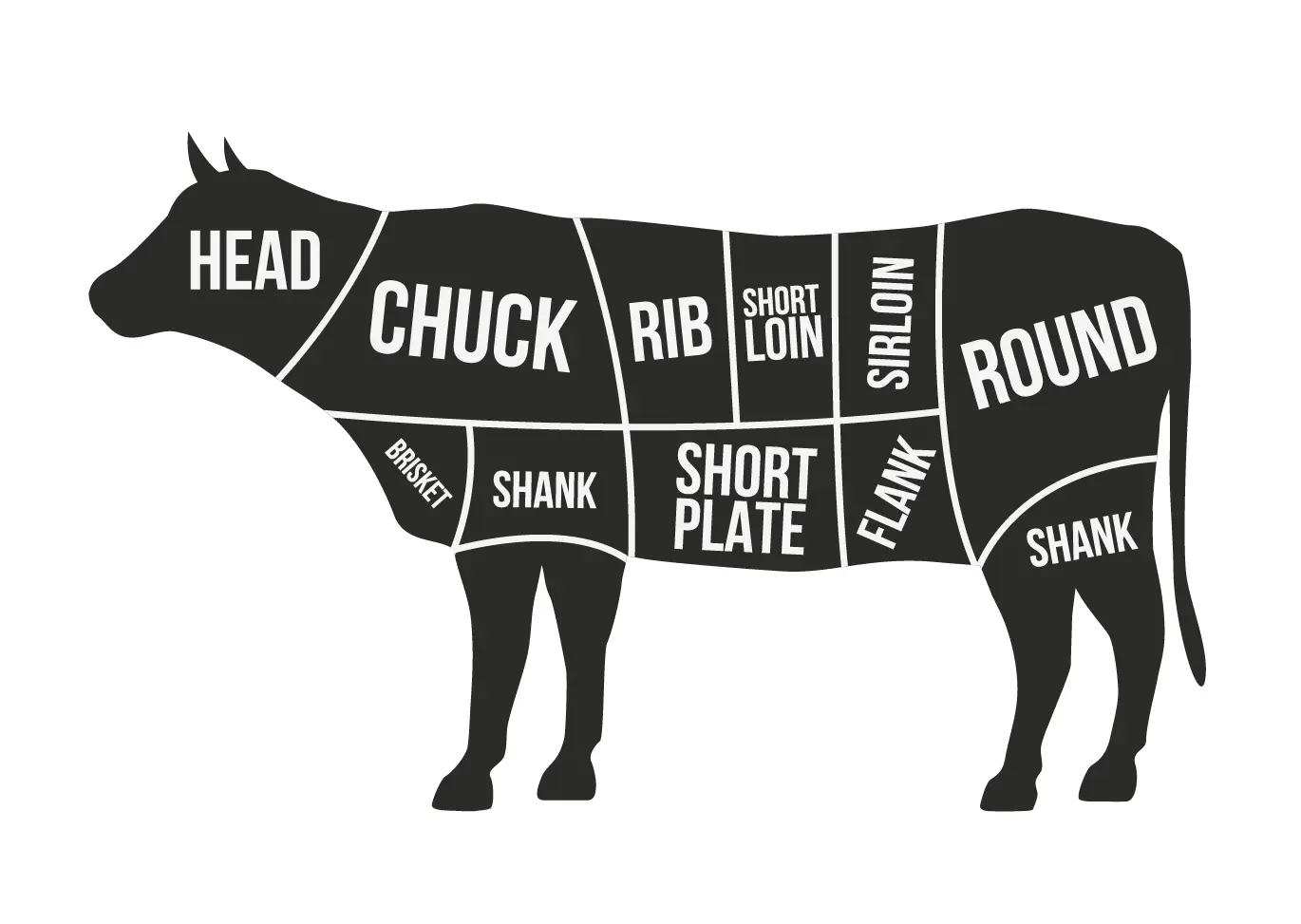
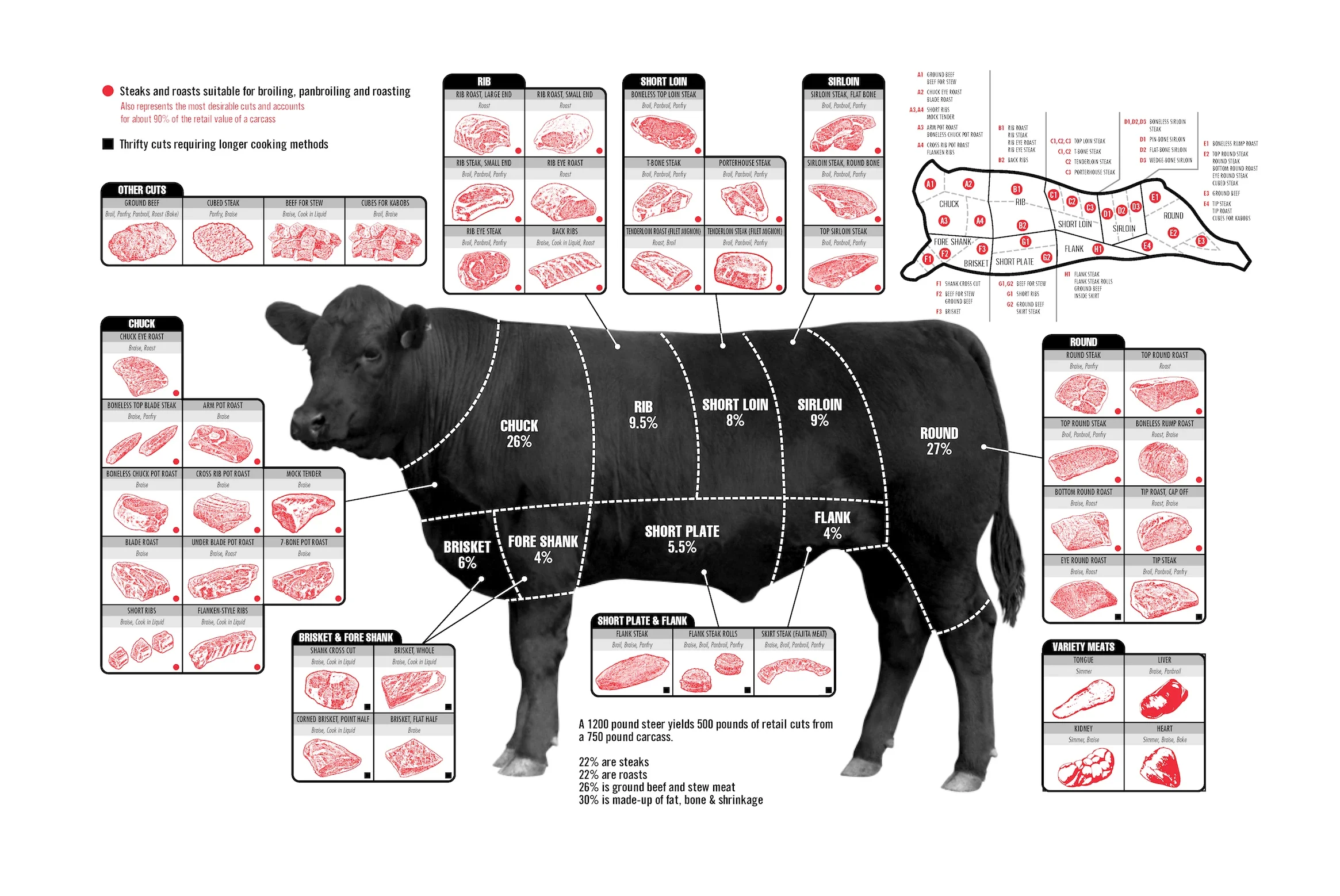
Beef is divided into 9 major primal sections. The position of each section on the animal — how hard the muscle works — determines how to cook it.
High heat, fast cook. The most tender steaks come from muscles that do the least work — the rib and loin sections. Rest after cooking and slice against the grain for maximum tenderness. Medium-rare to medium is ideal for almost all of these cuts.
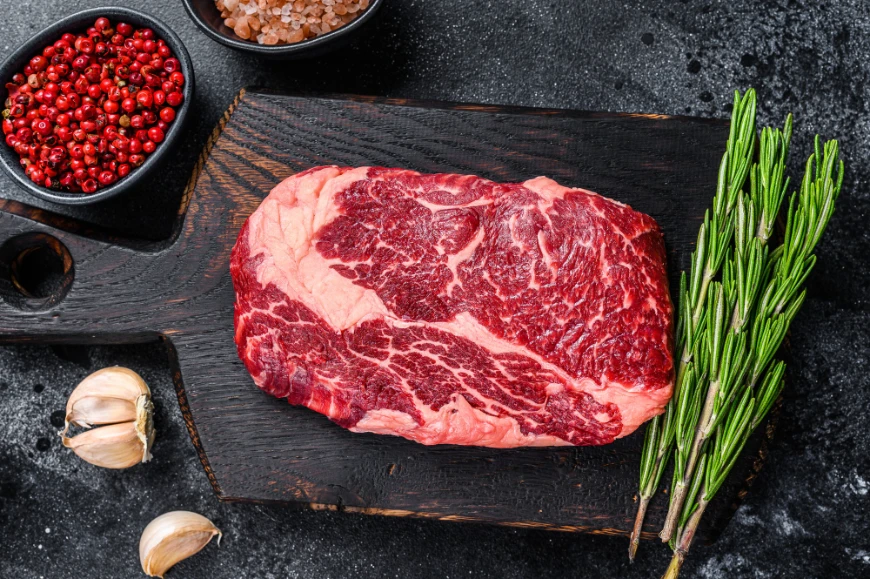
The most flavorful steak on the animal. Well-marbled with intramuscular fat that bastes itself as it cooks — rich, beefy, and deeply satisfying. From our grain-finished and Wagyu programs, the marbling is exceptional. Our grass-fed ribeye is leaner but intensely flavored.
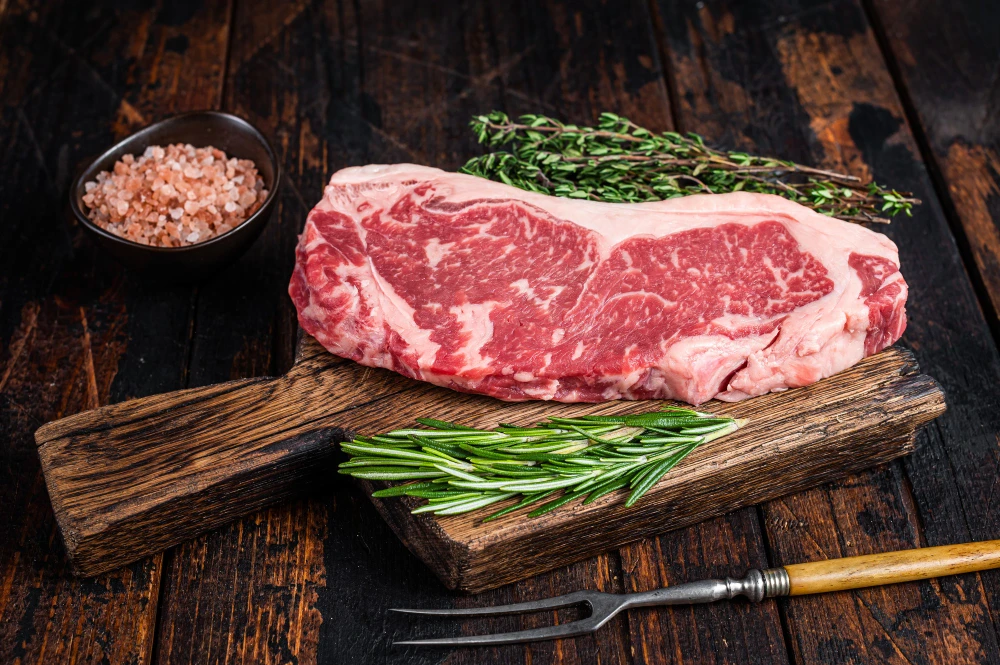
A firmer texture than the ribeye, with a strong, clean beef flavor. The strip steak is the benchmark steak — not as rich as the ribeye, not as lean as the tenderloin, and excellent in both our grass-fed and grain-finished programs.
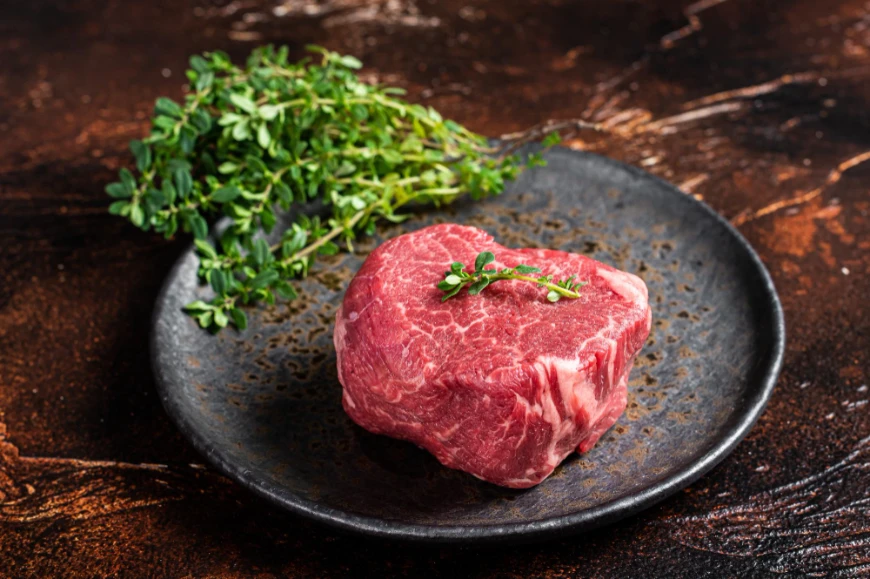
The most tender cut, and the leanest of the premium steaks. Mild flavor that lets seasoning and sauce do the work. Grass-fed tenderloin is particularly clean and delicate — an excellent choice for those who prefer lean beef.
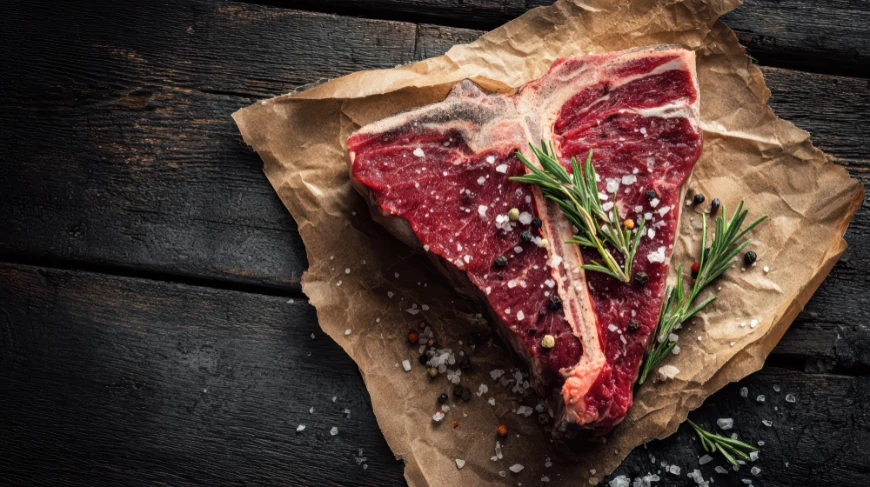
Two steaks in one — New York strip on one side of the T-shaped bone, tenderloin on the other. The porterhouse is a larger cut with a bigger tenderloin portion. Impressive on the plate and one of the most complete eating experiences in beef.
Also available
Sirloin Steak |
From the rear of the loin. Balanced between tenderness and flavor — an excellent everyday steak at a more accessible price than strip or ribeye. | Grill · Pan-sear · 130–140°F |
Flat Iron |
From the shoulder (chuck). Tender and well-marbled — one of the best value steaks on the animal. Second most tender cut overall. | Grill · Pan-sear · 130–135°F |
Skirt Steak |
Thin cut from the plate with strong, rich flavor. Cook hot and fast — slice thin against the grain. Classic for fajitas and Korean BBQ. | High heat grill · 130°F · Slice thin |
Flank Steak |
Lean, long-grain cut from the underside. Excellent marinated. Always slice across the grain — the difference in tenderness is dramatic. | Grill · Broil · 130–135°F · Slice thin |
Hanger Steak |
One per animal — from the diaphragm. Very flavorful, slightly coarser grain. A restaurant favorite that most grocery stores don't carry. | Grill · Pan-sear · 130°F · Ask about availability |
Chuck Eye Steak |
From the rib/chuck transition — similar flavor to ribeye at a lower cost. Often called the "poor man's ribeye." Well worth seeking out. | Pan-sear · Grill · 130–135°F |
Oven cooking for a crowd. A well-rested, properly seasoned beef roast is one of the most satisfying things to put on a table. Use a meat thermometer — the difference between medium-rare and well-done is 15 degrees and 30 minutes.
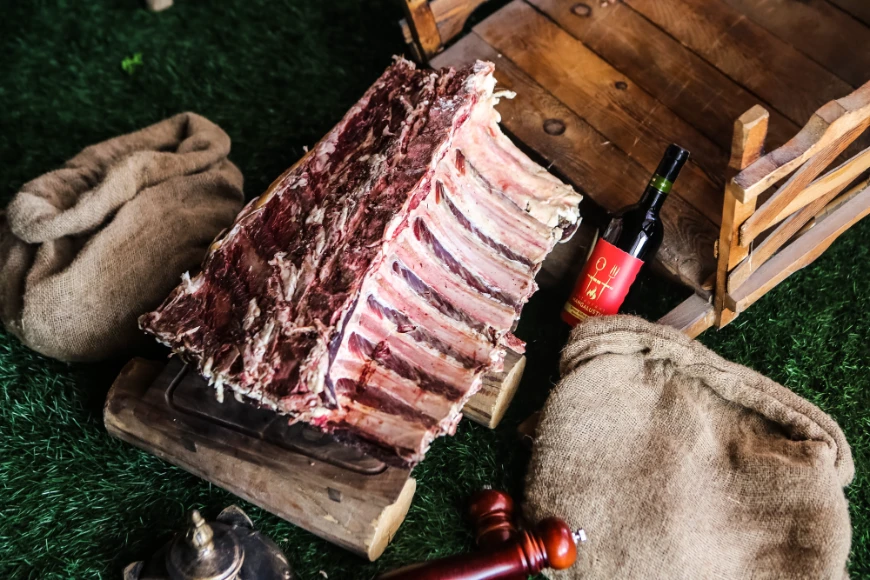
The most impressive roast in beef. A whole section of ribs roasted bone-in for maximum flavor — the bones act as a natural roasting rack and add extraordinary depth. Carved tableside, it is as much a presentation as a meal. Available from our grain-finished and Wagyu programs.
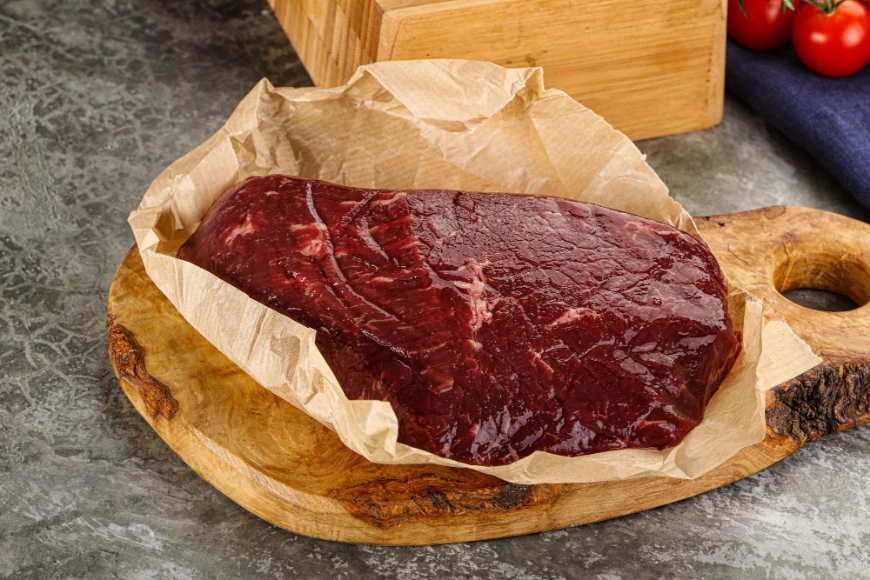
The classic pot roast cut. Well-marbled and rich in connective tissue that breaks down over hours of braising into extraordinary tenderness. Available from our grass-fed and grain-finished programs — grass-fed chuck has a particularly clean, concentrated flavor when braised.
Also available
Strip Loin Roast |
The whole NY strip section roasted as one piece. Elegant and flavorful — essentially a single large strip steak. Slices beautifully. | Roast · 130°F internal |
Tenderloin Roast |
The whole tenderloin — the most tender roast cut. Ties elegantly, cooks quickly. Classic for beef Wellington or simple roasted with herbs. | Roast · 125°F internal · Rest well |
Top Round Roast |
Lean cut from the rear leg. Best roasted to medium-rare and sliced thin. The basis for excellent deli-style roast beef. | Roast · 130°F · Slice thin |
Eye of Round |
Very lean, very uniform cylinder-shaped roast. Ideal for thin-sliced roast beef. Requires careful temperature management to avoid drying out. | Roast low · 125°F · Slice very thin |
The most flavorful cuts on the animal — and often the most affordable. Time and low heat transform tough, collagen-rich muscles into something extraordinary. Don’t rush them. Our grass-fed beef is particularly well-suited to braising, as the leaner muscle takes on braising liquid beautifully.
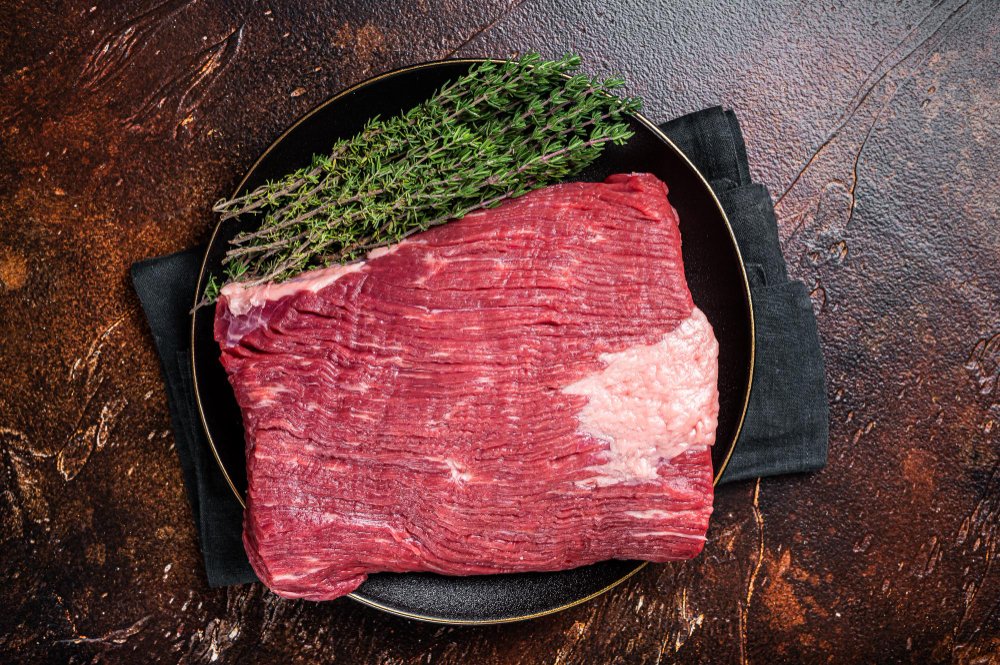
The king of barbecue. Rich in collagen and fat that renders over 10–14 hours of low smoking into something transcendent. Our grass-fed brisket responds exceptionally well to slow smoking — the leaner profile produces a cleaner smoke ring and more defined bark. Available from all programs.
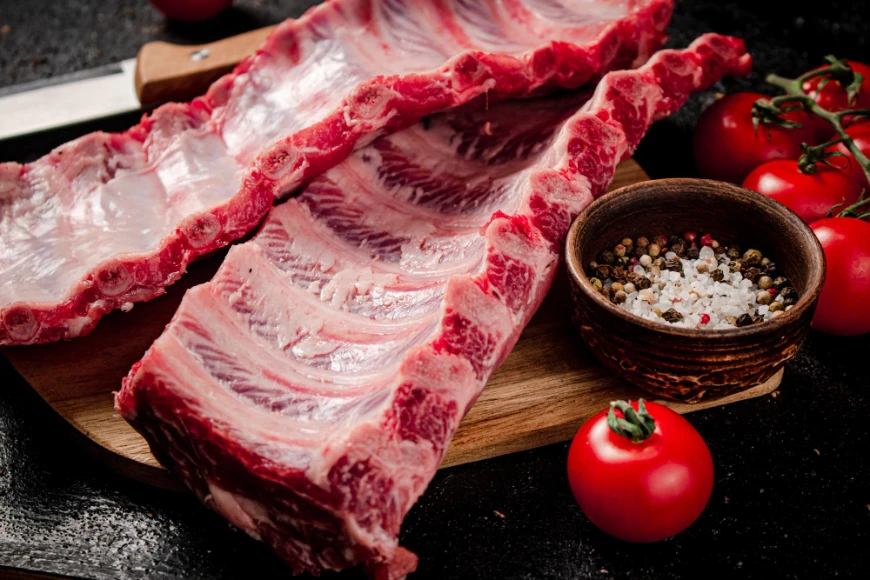
Braised beef short ribs are one of the great dishes in cooking — impossibly rich, falling from the bone, with a braising sauce that is worth drinking on its own. Plate short ribs (Texas-style) are large and meaty; chuck short ribs are smaller and more variable. Both are extraordinary from our cattle.
Also available
Beef Shank |
Lower leg, cross-cut into rounds. High collagen — the basis of Osso Buco. Three to four hours of braising produces extraordinary depth of flavor. | Braise · 300°F · 3–4 hours |
Beef Neck |
Less common but exceptionally flavorful. An excellent cut for slow-cooked beef stew or ragù. Ask about availability. | Braise · Stew |
Less common cuts that reward curiosity. Some are visually dramatic, some are value plays, and some are simply cuts that most grocery stores never stock. Ask us about current availability — some of these are limited.
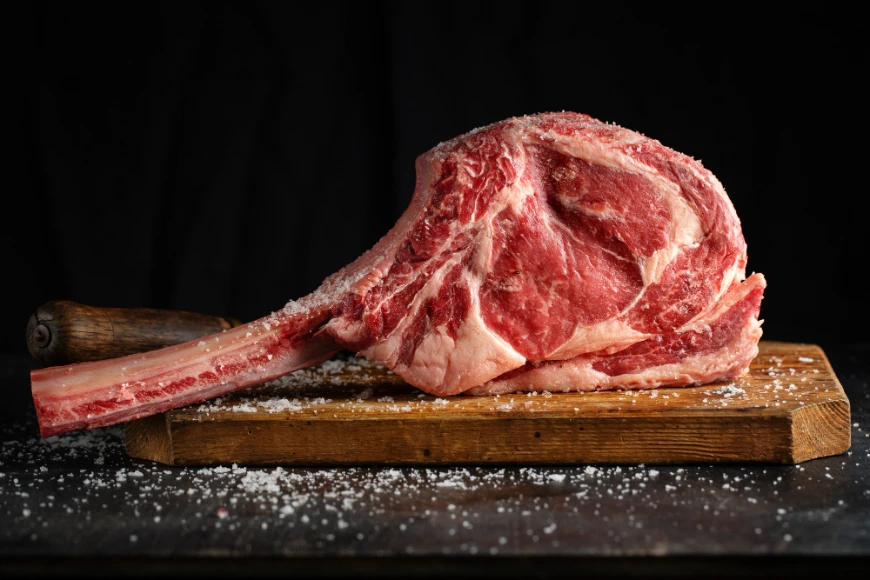
A ribeye with the full rib bone left intact — often 18 inches or longer. Visually dramatic and functionally excellent: the bone adds flavor and the thick cut allows a perfect reverse sear. A special occasion cut. Ask about availability.
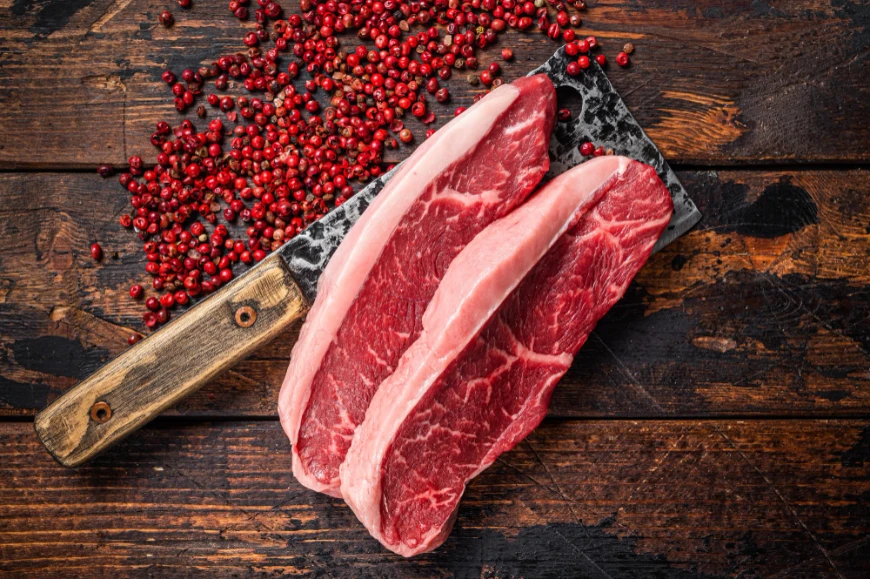
The most prized cut in Brazilian steakhouse cooking. A thick fat cap that renders as it cooks, basting the lean muscle beneath. Cooked whole and sliced, or cut into steaks folded over skewers. Exceptionally good from our grain-finished program.
A California classic that deserves wider recognition. A triangular roast from the bottom sirloin with good marbling and strong flavor. Grill or roast whole, rest generously, and slice against the grain. Excellent from our grass-fed program.
Also available
Denver Steak |
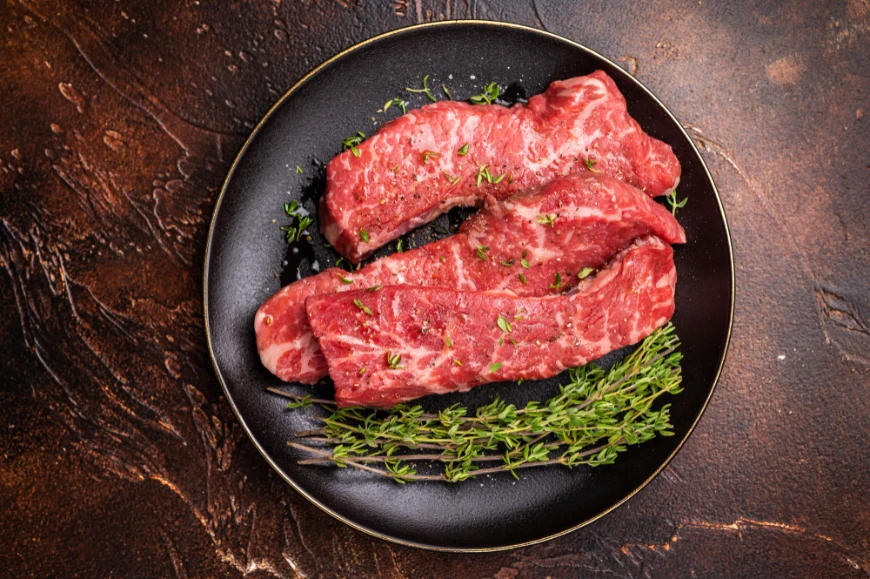
From the chuck underblade. Tender and well-marbled — one of the newer "butcher's cuts" gaining recognition. Excellent value. | Grill · Pan-sear · 130–135°F |
Bavette (Sirloin Flap) |
Loose-grained, intensely flavorful cut from the sirloin. Similar cooking to skirt or flank — high heat, slice thin across the grain. | Grill · 130°F · Slice thin |
Teres Major (Petite Tender) |
Small, very tender muscle from the shoulder. Second most tender cut on the animal after the tenderloin. Limited availability — ask us. | Grill · Pan-sear · 130°F |
Hanger Steak |
One per animal, from the diaphragm. Very flavorful, slightly coarser grain. A Paris bistro staple — steak frites territory. | Grill · Pan-sear · 130°F · Ask about availability |
Our ground beef is made from trim across the animal — the fat ratio and breed character come through even here. Available from both grass-fed and grain-finished programs.
| Ground Beef | Trim from across the animal. Our grass-fed ground beef is noticeably darker and leaner — exceptional for burgers and meat sauce where the beef flavor should lead. Our grain-finished ground has more fat and is excellent for meatballs, meatloaf, and blended dishes. | Burgers · Meatballs · Meat sauce · Meatloaf |
| Stew Meat | Cubed beef from chuck or round, uniformly sized for even cooking. Our grass-fed stew meat produces a particularly clean, rich broth when braised low and slow. | Soups · Stews · Braises |
Nutrient-dense and underutilized. Our grass-fed beef organs are particularly clean in flavor. Ask about availability.
| Liver | Nutrient-dense with strong flavor. Grass-fed beef liver is milder than grain-fed. Pan-fry with onions or use in pâté. | Pan-fry · Pâté |
| Heart | Lean muscle, dense texture, mild flavor. Slice thin and cook hot. An excellent introduction to offal. | Grill · Pan-sear |
| Tongue | Rich and tender when braised 3–4 hours. Peel, slice, and serve. Traditional in Mexican, Jewish, and Eastern European cooking. | Braise · 3–4 hours |
| Oxtail | From the tail — gelatin-rich and deeply flavorful. The basis of extraordinary oxtail stew and ragù. One of the most flavorful cuts on the animal. | Braise · 4–5 hours |
Grass-fed beef tallow and bone broth have become increasingly sought-after by health-conscious cooks. We have them.
| Marrow Bones | Rich in marrow — roast and serve on toast, or use for stock. One of the great simple preparations in all of cooking. | Roast 425°F · 15 min |
| Soup Bones | For bone broth and stock. Roast first for a darker result. Our grass-fed bones produce exceptional broth. | Stock · Broth |
| Beef Tallow | Rendered beef fat. Excellent for roasting vegetables, frying, and seasoning cast iron. Grass-fed tallow has a clean, beefy flavor. | Roasting · Frying · Cast iron |
| Beef Bacon | Made from fatty portions of the brisket or plate, cured and smoked. A rich, beef-forward alternative to traditional bacon. | Pan-fry · Grill |
| Jerky & Meat Sticks | Made from our own beef with simple seasonings. Ask about current flavors and availability. | Ready to eat |
Ready to taste the difference?
All three beef programs available at our farm store in Traverse City. Wholes, halves, and quarters available year-round from our grain-finished program.
EXPORE OTHER CUT GUIDES
