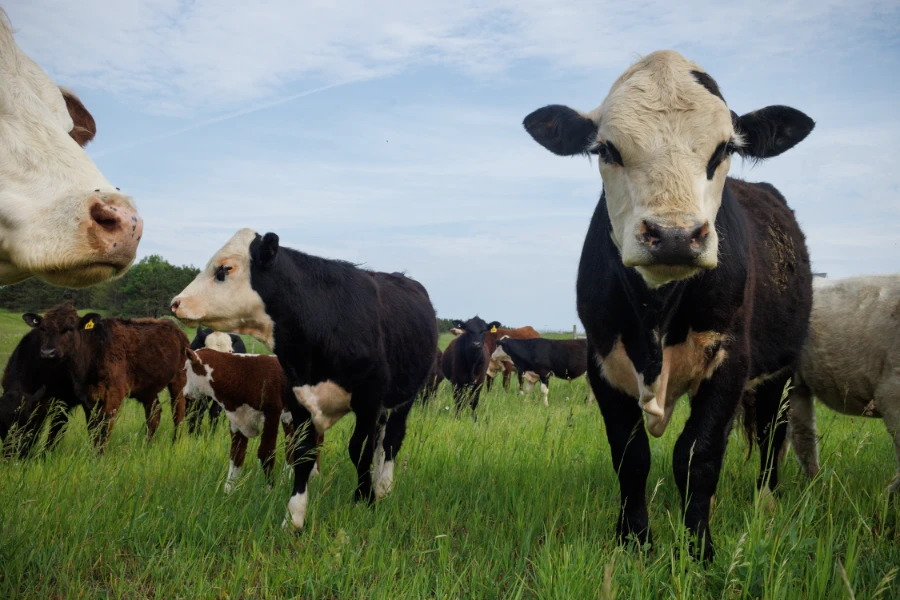
 Pasture-raised animals grow slowly, spend time outdoors, and eat what their bodies are designed to eat. That combination produces meat that looks, smells, and tastes fundamentally different from what most people find at a grocery store.
The most visible sign is the fat. In beef, grass-fed fat is yellow — the result of beta-carotene absorbed from pasture. In chicken, the fat under the skin is a deep golden color. In heritage pork, the fat is thick and white in a way that renders beautifully in a hot pan. These are not cosmetic differences. They reflect what the animal ate, how it lived, and how its muscles developed over time.
Slower growth allows more time for intramuscular fat to develop and for the muscle itself to mature. The result is meat with depth — a clean, forward beef flavor, pork with real richness, chicken that actually tastes like chicken. Many customers tell us the experience is like tasting these foods for the first time.
 Pasture-raised and grass-fed meats differ from conventional in ways that go beyond flavor. Animals raised on pasture produce meat with a more favorable ratio of omega-3 to omega-6 fatty acids — a ratio that in conventional meat has shifted significantly toward omega-6 as diets have shifted toward grain. Grass-fed beef contains higher levels of conjugated linoleic acid (CLA), a naturally occurring fat that appears across a range of nutritional research.
Mineral content also differs. Animals with access to diverse pasture vegetation absorb a broader range of trace minerals than animals fed uniform grain-based rations. And because our animals are not given routine antibiotics, you’re not getting residual exposure to medications that were never intended for human consumption.
 At Anavery, animal welfare isn’t a marketing position — it’s the foundation of how we operate. Our animals live outdoors, behave naturally, and are managed in small groups by people who know them individually. That’s not a standard we aspire to. It’s just how we run the farm.
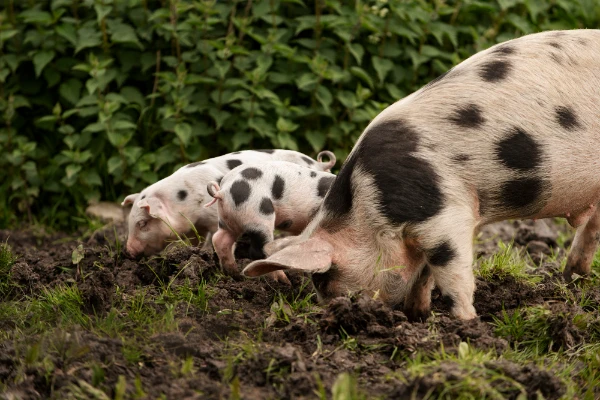
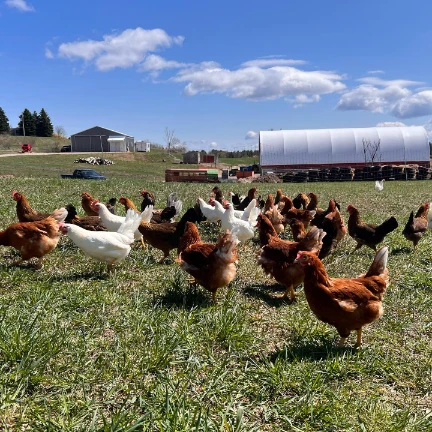
Our hens are on pasture from April through November in mobile coops moved to fresh ground every two to three days. Our heritage-breed pigs — primarily Red Wattle and Large Black — root in wooded areas and open pasture. Our cattle graze on rotationally managed land. Our lambs are born at northern Michigan partner farms and finished here on Secor Road.
What we don’t do: no farrowing crates, no routine antibiotics, no growth hormones, no confinement barns. For a fuller picture of how every species is raised, visit:
At Anavery, animal welfare isn’t a marketing position — it’s the foundation of how we operate. Our animals live outdoors, behave naturally, and are managed in small groups by people who know them individually. That’s not a standard we aspire to. It’s just how we run the farm.
Our hens are on pasture from April through November in mobile coops moved to fresh ground every two to three days. Our heritage-breed pigs — primarily Red Wattle and Large Black — root in wooded areas and open pasture. Our cattle graze on rotationally managed land. Our lambs are born at northern Michigan partner farms and finished here on Secor Road.
What we don’t do: no farrowing crates, no routine antibiotics, no growth hormones, no confinement barns. For a fuller picture of how every species is raised, visit: 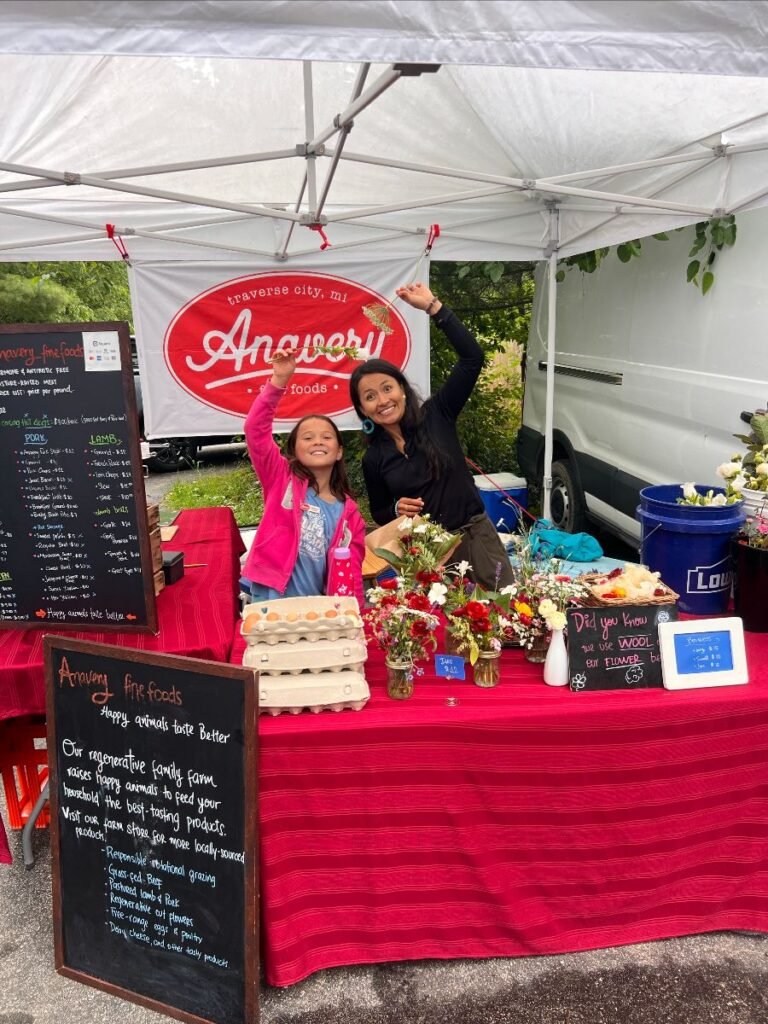
Every dollar spent on locally raised meat stays closer to home. When you buy from Anavery, you’re supporting our farm and our family — and, through our network of Amish partner farms and local processing facilities, a broader community of people in northern Michigan who are trying to make a living doing things the right way.
Small-scale, pasture-based farming is harder and more expensive than industrial production. It requires more land, more labor, and more time. The animals take longer to grow. The margins are tighter. The only way it works economically is if enough people are willing to pay the actual cost of food produced this way — rather than the artificially low prices made possible by industrial consolidation and externalized environmental costs.
Buying a whole or half animal, joining a buying club, or simply choosing local when you have the option are concrete things you can do to keep this kind of farming viable in our region.
